Advanced Elbow Joint Care
Elbow Replacement Surgery in Delhi NCR
Relief from severe elbow pain
Improved arm movement and function
Care for arthritis and complex fractures
Knee Replacement Testimonial
Joint Replacement Recovery Story

Early Elbow Care
Non-Surgical Elbow Care
Early arthritis, mild stiffness, or manageable elbow pain may be treated with medicines, activity modification, physiotherapy, splinting, and injections in selected cases.
Pain relief medicines and inflammation control
Elbow mobility and strengthening exercises
Bracing, splinting or injection options when suitable

Your Elbow Replacement Specialist
Meet Dr Rahul Grover
Dr Rahul Grover is an experienced orthopaedic surgeon in Delhi with expertise in joint replacement, fracture surgery, complex elbow injuries, sports orthopaedics, and recovery-focused care.
His elbow treatment approach focuses on accurate diagnosis, implant selection, soft tissue protection, pain control, and guided rehabilitation to help patients regain useful arm function.
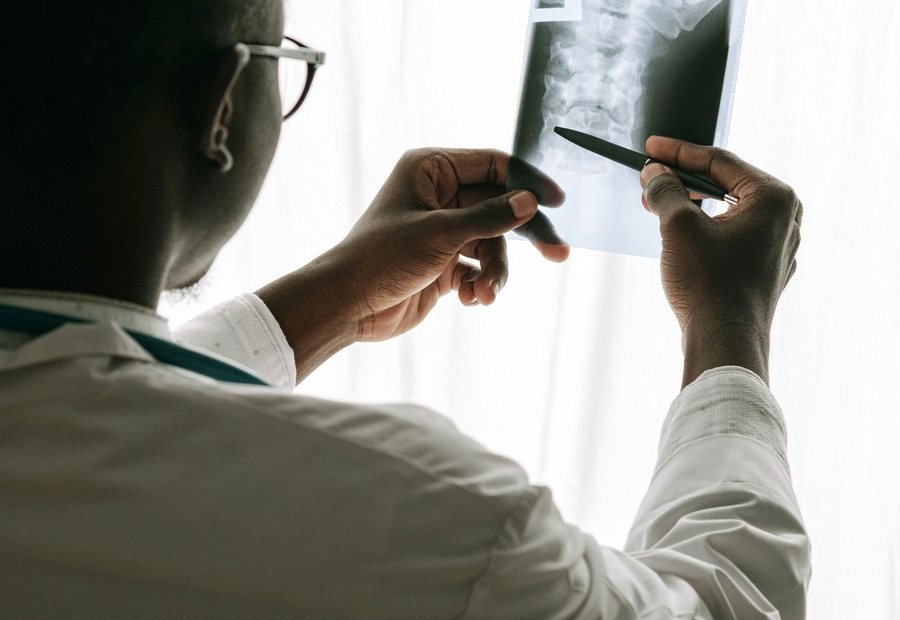
Need elbow X-ray advice?
Share your X-ray or CT report for an expert opinion on elbow pain, arthritis, fracture damage, or stiffness.
Send Report
Understand Treatment
What is Elbow Replacement?
Elbow replacement is a specialized surgery in which damaged parts of the elbow joint are replaced with an artificial implant. It may be advised when arthritis, severe fracture damage, failed healing, or deformity causes major pain and loss of movement.
The goal is to reduce pain, improve elbow bending and straightening, and restore practical arm function for daily activities like eating, dressing, personal care, and light household tasks.
Replaces damaged elbow joint surfaces
Helps improve bending, straightening and arm use
Planned around bone quality and daily activity needs
Used for selected arthritis and fracture damage cases
Requires careful implant and ligament planning
Rehabilitation protects the implant while restoring motion
Long-term precautions help preserve elbow function
When To Consult
Signs You May Need Elbow Evaluation
Elbow pain and stiffness should be evaluated when daily arm use becomes difficult or symptoms persist after injury or arthritis treatment.
Severe elbow pain
Pain that affects eating, dressing, lifting, sleep, or routine work needs assessment.
Stiffness and limited motion
Difficulty bending or straightening the elbow can affect basic daily activities.
Complex elbow fracture
Severe fractures near the elbow joint may need specialist surgical planning.
Advanced arthritis
Rheumatoid arthritis or osteoarthritis can damage the elbow joint surface.
Old injury problems
Malunion, nonunion, failed fixation, or painful old fractures can cause long-term disability.
Instability or deformity
Loose, unstable, or visibly deformed elbows may need advanced evaluation.
Treatment Decision
When is Elbow Replacement Recommended?
Elbow replacement is considered when joint damage is severe and non-surgical care or fracture reconstruction cannot provide useful pain relief and movement. The decision depends on diagnosis, age, bone quality, ligament stability, fracture pattern, medical fitness, and daily activity needs.
It may be recommended for advanced rheumatoid arthritis, severe osteoarthritis, complex distal humerus fractures in selected patients, failed fixation, painful deformity, or old injuries with major stiffness and disability.
The elbow joint surface is severely damaged
Arm function is limited by pain and stiffness
A complex fracture cannot be reconstructed reliably
Medicines, injections, splints or physiotherapy are no longer enough
Surgical Planning
Total Elbow Replacement Procedure
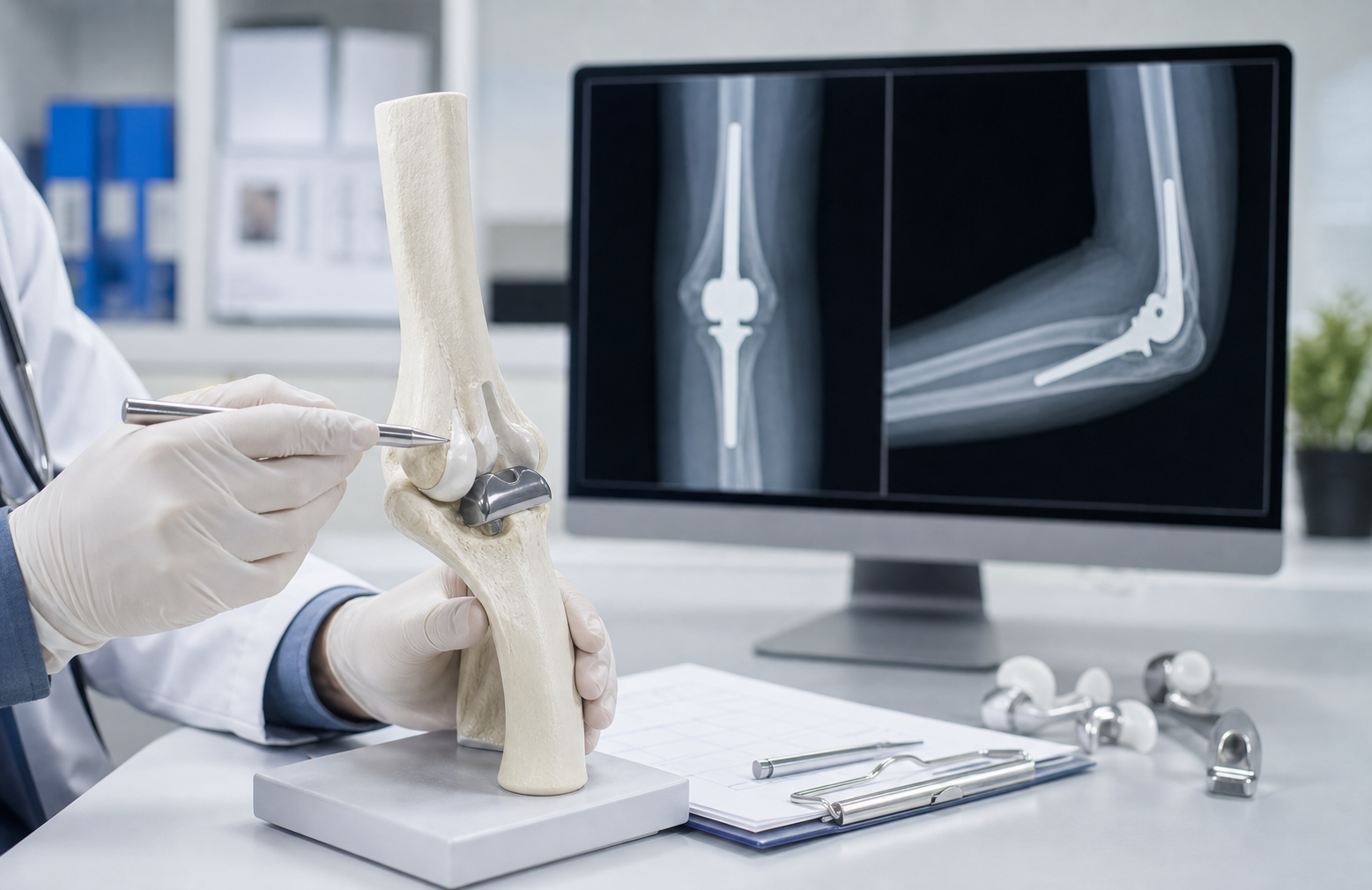
During elbow replacement, damaged joint surfaces are removed and replaced with artificial components. The implant may be linked or unlinked depending on bone quality, ligament condition, diagnosis, and stability needs.
Because the elbow is a smaller and more delicate joint than the hip or knee, careful surgical planning and long-term precautions are important for implant protection.
Detailed X-ray or CT-based planning
Implant selection based on stability and bone quality
Soft tissue and nerve protection during surgery
Guided motion and lifelong lifting precautions
See The Difference
Elbow Replacement vs Delayed Care
| Factor | Elbow Replacement | Delayed Care |
|---|---|---|
| Pain relief | Designed to reduce severe joint pain | Pain may continue or worsen |
| Movement | Helps restore useful bending and straightening | Stiffness may become more fixed |
| Daily function | Planned for eating, dressing and self-care tasks | Arm use may remain restricted |
| Joint damage | Damaged joint surface is replaced | Deformity and bone loss may progress |
| Recovery plan | Guided rehab and long-term precautions | Function can decline without structured care |
Take The Next Step
Start Your Elbow Recovery Journey
Get an expert opinion for elbow arthritis, severe fracture, stiffness, failed injury, or restricted arm movement.
Recovery Support
Rehabilitation After Elbow Replacement
Rehab after elbow replacement is carefully staged. The goal is to protect the implant while improving pain, swelling, motion, and practical arm use.
Dr Rahul Grover guides patients through movement, splinting if needed, wound care, strengthening, and long-term precautions based on healing and implant stability.
Early Phase
Pain control, swelling reduction, wound care and gentle protected motion.
Motion Phase
Guided bending and straightening exercises to reduce stiffness.
Function Phase
Return to eating, dressing, writing, light daily tasks and self-care.
Long-Term Care
Activity modification and lifting precautions to protect the implant.
Expert Elbow Care
Why Choose Dr Rahul Grover for Elbow Replacement?
Experienced orthopaedic surgeon
Focused care for elbow arthritis, fracture damage, stiffness, and failed elbow injuries.
Advanced imaging review
X-ray and CT findings are reviewed carefully before choosing replacement or reconstruction.
Joint replacement expertise
Implant planning is based on bone quality, stability, diagnosis and functional needs.
Focus on arm function
Treatment is planned around useful motion for daily activities and independence.
Guided rehabilitation
Step-by-step recovery support helps restore motion while protecting the implant.
Long-term safety guidance
Patients receive practical advice on lifting limits, activity choices and follow-up care.
Questions Answered
Elbow Replacement FAQs
Elbow replacement may be considered for advanced arthritis, severe elbow fracture damage, failed fixation, deformity, or stiffness causing major pain and loss of function.
It is less common than hip or knee replacement and is usually advised only for selected patients with severe elbow joint damage.
Heavy lifting is usually restricted after elbow replacement. Long-term precautions are important to protect the implant and reduce loosening risk.
Mild or early arthritis may improve with medicines, physiotherapy, splints, activity changes, and injections. Severe joint destruction may need surgical evaluation.
Watch: Rheumatoid Arthritis
Rheumatoid arthritis can affect multiple joints, including the elbow.
Expert Opinion
Living With Elbow Pain or Stiffness?
Book a consultation with Dr Rahul Grover for diagnosis and a suitable elbow replacement treatment plan.